
Hostas for Shade: Compare Suitable Varieties
Choose a shade hosta for the space beneath the leaves as well as the space above the soil. Tree roots, dry ground and dense overhead cover can make two shaded beds behave very differently.
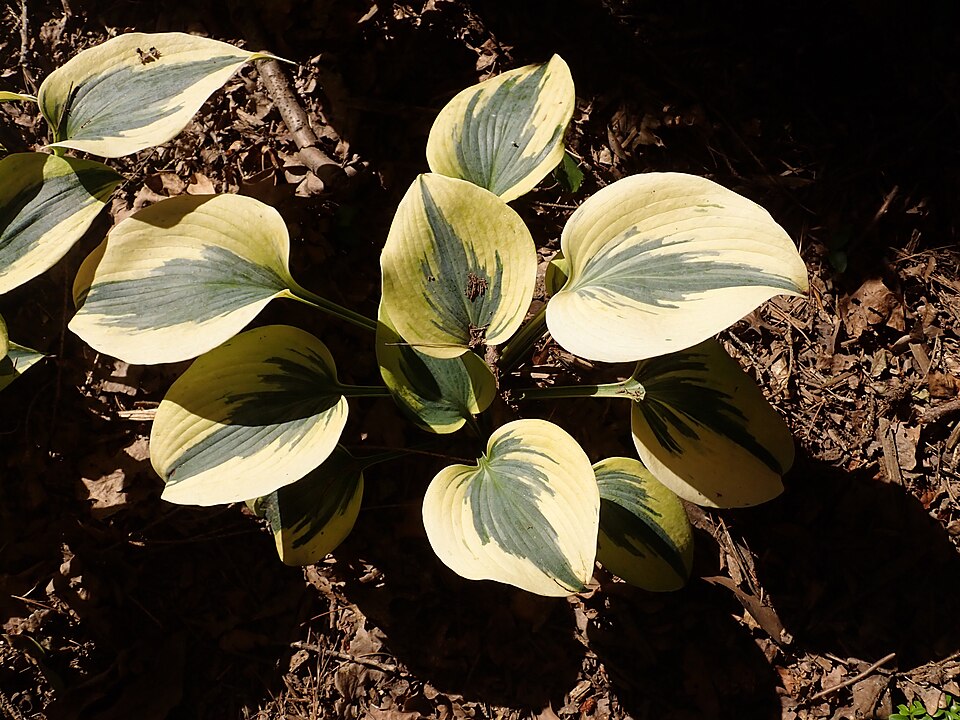
Autumn Frost
Young Hosta 'Autumn Frost' foliage, identified by the source photographer as this cultivar.
Photo: Salicyna · CC BY-SA 4.0 · Resized by Wikimedia

Blue-green With Yellow Margins • Medium • Walters Gardens, Inc. • 2009
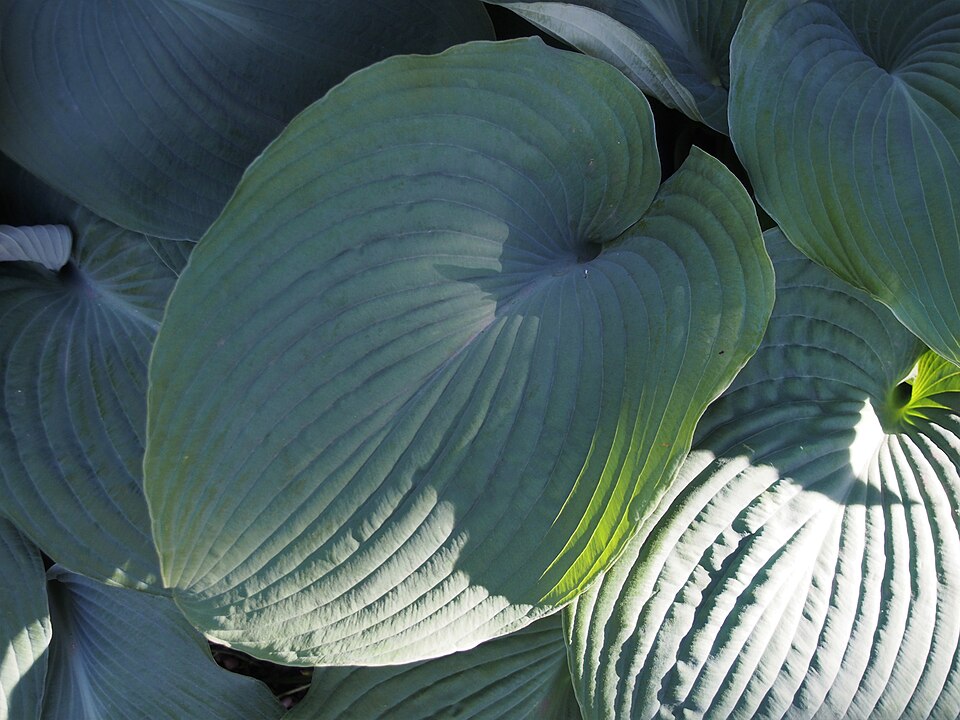
Blue Angel
Leaf detail of Hosta 'Blue Angel', identified by the source photographer as this cultivar.
Photo: Agnieszka Kwiecień, Nova · CC BY-SA 4.0 · Resized by Wikimedia

Blue • Giant • Aden • 1986

Blue Mouse Ears
Hosta 'Blue Mouse Ears'. Photograph identified by its source as this named cultivar.
Photo: Andy Mabbett · CC BY-SA 3.0 · Resized by Wikimedia

Blue • Mini • E./Deckert • 2000
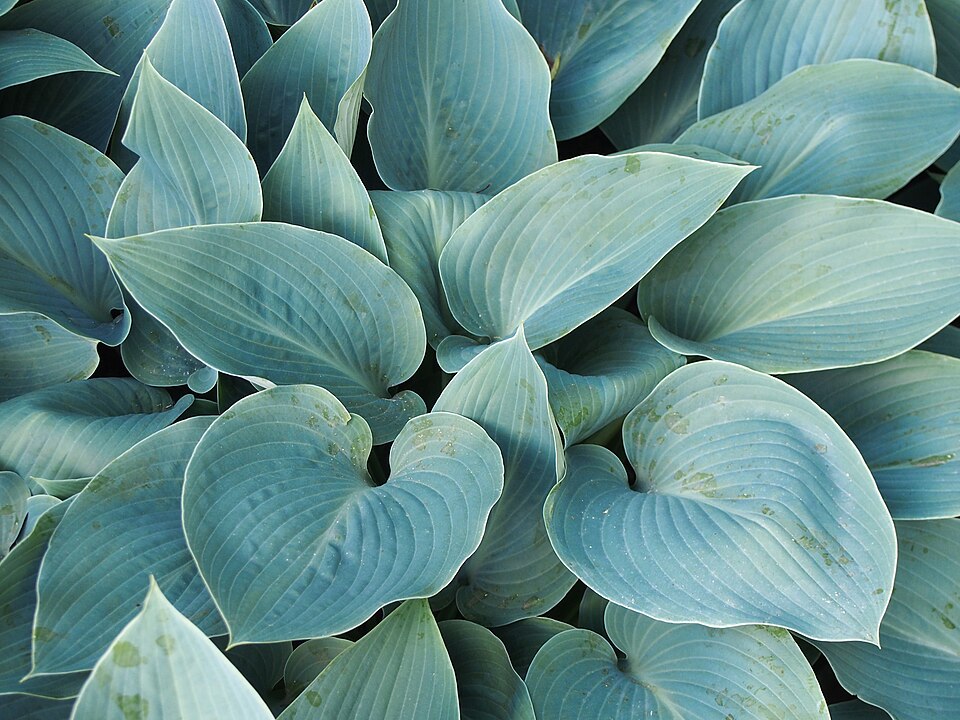
Halcyon
Leaf detail of Hosta 'Halcyon', identified by the source photographer as this cultivar.
Photo: Agnieszka Kwiecień, Nova · CC BY-SA 4.0 · Resized by Wikimedia

Blue • Medium • Smith/BHHS • 1988

For a shaded bed, compare Blue Mouse Ears for a compact mound, Halcyon for a medium blue-green plant, and Autumn Frost for contrasting pale margins. Each has a published part-shade to shade range. Shade does not remove the need for moisture and suitable soil.
Choose by the job in the border
A useful shade collection includes plants at different scales. Match a variety to the position it will fill, then check its mature footprint on its own profile.
| Variety | Selection role | Published foliage footprint |
|---|---|---|
| Blue Mouse Ears | Small edge or container | 8 in high × 12 in wide |
| Halcyon | Medium blue-green mound | 18 in high × 36 in wide |
| Autumn Frost | Pale margins in a shaded border | 12 in high × 24 in wide |
Check dry shade before you choose
Look for roots competing in the planting area, rain kept out by dense foliage and soil that dries quickly. A shaded space can still be dry. Use the site’s actual conditions to decide whether a hosta is a sensible choice.
Do not build up a deep new bed against a tree trunk or cut major tree roots simply to fit a plant. Ask for local tree advice when planting would affect an established tree.
Use foliage contrast with enough room
Combine plain blue-green leaves with a pale-edged plant when you want contrast without many flower colors. Keep smaller mounds at the front so their leaves stay visible.
Compare the normal mature color and spread rather than selecting from an image alone. If you are still deciding between shade levels, use the growing guide before making your shortlist.
Frequently asked questions
Will hostas grow in total darkness?
No. A shade-tolerant garden plant still needs light. Dense cover and very low light can limit growth, so compare the actual planting conditions with the cultivar’s guidance.
Does shade mean I do not need to water?
No. Roots and overhead foliage can leave a shaded bed dry. Check soil moisture rather than assuming the area stays damp.
What is a compact hosta for a shaded container?
Blue Mouse Ears is one candidate, with a published mature spread of about 12 inches. Choose a drained container and plan water and winter care for your climate.
Explore next
- Hosta Varieties: Compare Plants and Find Growers
- Blue Hostas: Compare Varieties and Find Growers
- Variegated Hostas: Compare Leaf Patterns
- Sun-Tolerant Hostas: Compare Varieties
- Do Hostas Need Sun or Shade?
- Hosta Care: A Practical Growing Guide
- Hosta Companion Plants for a Shade Garden
- Planning a Shade Garden with Hostas
- Watering Hostas: Moisture, Soil and Signs of Stress
Sources and further reading
- Hosta 'Blue Mouse Ears' (Walters Gardens)
- Hosta 'Halcyon' (Walters Gardens)
- Hosta 'Autumn Frost' (Walters Gardens)
- How to grow hostas (Royal Horticultural Society)
Sources checked . Growing conditions and nursery descriptions can differ.